Tag Archives: Web design

E-Commerce: 3 decades, 3 webshops

E‑Commerce anno 2026


June 23 2026, on Vibe’s (ex‑wife) birthday, I launched a Shopify webshop for her:
Design Crush.

Shopify likes to say you can build a shop in “seconds” or “minutes.” I disagree. Yes, you can spin up a blank store fast. But a real shop — with products, collections, shipping rules, payments, policies, and a design that doesn’t look like a  generic Shopify theme #12, is something else entirely. Even the Shopify’s own “quick start” tutorial is 50 minutes long. And that’s before you touch the real work: structure, payment, logistics, identity, products, collections and all the tiny decisions that shape a store.

The 2026 Workflow: Shopify Partner, YouTube, Sidekick, and Patience

To avoid using the 3-day trial and paying for a Shopify plan during the entire build, I registered as a Shopify Partner, Partner accounts allow full access to store setup, theme customization, apps and testing before you transfer the shop to the client, who then activates their own Shopify plan.

During the design process, I had good help from YouTube tutorials, Shopify documentation, and Shopify’s AI assistant, Sidekick – useful for various tasks, but with limitations. The challenge was knowing what to ask and how to ask it.

And when you need human support? Good luck! Support in 2026 is AI driven all the way. Getting an actual person feels like unlocking a secret level.

Still — the shop is live. It works 🙂

This isn’t the first shop I’ve built for Vibe – it’s the third. Three shops, three decades, three completely different kind of e‑commerce. It made me little nostalgic and I wanted to look back. 

Memory Lane: Three eras of building webshops

Early 2000s – kejserensnyeklaeder.dk: The Wild West

 
[Pictures from Internet Archive

Back in the beginning of the millennium, Vibe had a children’s clothing and interior shop, Kejserens Nye Klæder (The Emperor’s New Clothes) in Gentofte, north of Copenhagen. I built kejserensnyeklaeder.dk – one of the early boutique e‑commerce concepts in Denmark.

The first version didn’t have a proper shopping cart. Customers filled out a form with the products the wanted, hit submit, and an email arrived in the inbox. Later, a developer friend helped turn it into something closer to a real shop. No templates. No platforms. No AI. Just HTML, forms, and stubbornness.

2011 — blacknwhite.dk: The PHP Era


[Picture from Internet Archive]

Fast forward a decade. Vibe started an interior design shop, so I built blacknwhite.dk, using osCommerce, a PHP‑based platform. Read about the decision process at the time

It was a massive step up from web forms, but still very manual. YouTube tutorials were rare. Documentation was scattered. The design process was challenging. If something broke, you were digging through forums and spending many hours editing the many PHP files. Everything Shopify now gives you as templates and checkboxes was something you configured or hacked together – by hand.

2026 — Design Crush: Shopify + AI

And now Shopify handles the plumbing. Sidekick answers the technical questions. The barrier to entry is lower than ever.

But the real work hasn’t changed.

What has changed — and what hasn’t

Across all three eras – forms in 2000, PHP in 2011, AI‑assisted Shopify in 2026 – the interesting shift isn’t speed. It’s where the effort goes.

  • In the early 2000s, the challenge was conceptual: e‑commerce barely existed.
  • In 2011, the challenge was technical: PHP, server config, platform quirks.
  • In 2026, the technical barrier is gone. The challenge is decisions: structure, identity, logistics, policies, product data.

The tools evolve. The work remains human.

Good luck to Design Crush.

Header Images

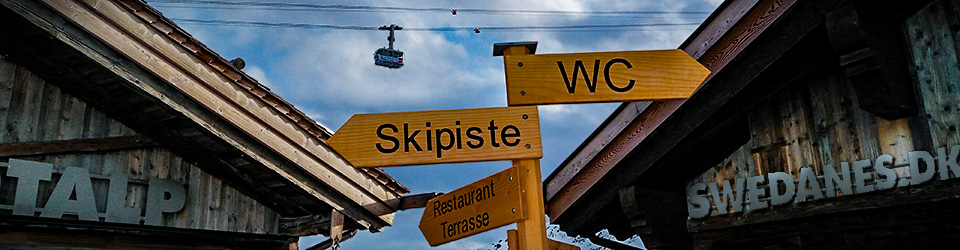
Overview of the different header images. They are set to be displayed in random order, meaning they should change when opening a new page.

Kullaberg, Sweden

Bangalore, India

Crete, Greece Agia Marina Crete panorama

Limhamn, Sweden

Passo del Tonale, Italy
Passo Tonale

Davos, Switzerland 

Madrid, Spain


Barcelona, Spain

Mallorca, Spain

Paris, France

El Caminito del Rey, Spain

New York, USA

London, England

Brisbane, Australia

Photoshop design

The e-commerce platform

After some serious research and some good recommendations from friends and colleagues, thanks for that, I ended up selecting oscommerce as platform for blacknwhite.se (closed).

A major reason for using oscommerce is that it’s the platform for blacknwhite.dk (closed) and looking through the check list from the last post:

  • User friendly front end and back end – prefer to see most of the information on one page instead of many, like tabs. Check
  • Newsletter subscribe/unsubscribe – WYSIWYG newsletter designer, overview of subscribers Check
  • Swedish and Danish language pack Check
  • Swedish and Danish currency Check
  • Payment gateway to Swedish to hosts like wannafind, payer (se), epay, payson etc. On the To Do list
  • Easy to design in CSS files, template files or HTML files Easy? but possible
  • Easy to create extra information pages with WYSIWYG editing Check
  • Product description with WYSIWYG editor Check
  • Easy cross sell feature Check
  • Free templates for download and easy installation Haven’t investigated this yet
  • More than one image on the description Check
  • Lightbox display of images – fast, neat and editable Lightbox installed but only working on some pages
  • Who’s online feature – real time view of who is visiting, are they registered customer, what they buy, where they come from etc. Check
  • For the future a Live help feature There is possibility for this

The oscommerce is maybe the e-commerce platform that started it all. Now days there are a few different versions built on oscommerce:

Color Scheme Designer

Wednesdays I attend a class, Interface design and Digital Esthetics, where I learn about different aspects on web design. Thought it was about time to get a proper education in this area 😉

At one of this classes we were introduced to Color Scheme Designer. It’s a cool and useful tool that helps you find a matching color scheme for your web site. Very easy to use and lots of adjustments, try it…

Color Scheme Designer

The reason we take the class:

“To the blind all is sudden”

Sunday 1 of advent Swedish cities have “skyltsöndag“. This is to get the Christmas feeling starting. The shops are open and display Christmas decorations in the windows. Some serve “glögg och pepparkakor” (mould wine and ginger bread).  According to Wikipedia the first skyltsöndag was in Stockholm 1953.

Blacknwhite.dk had together with Shiva Tea House also opened and I served glögg and “æbleskiver” from 12.00-18.00. Æbleskiver is a Danish tradition/delicates and are mostly enjoyed at Christmas time served with icing sugar and jam.  Translated to English æbleskiver is apple slices but these days there is no sign of apples in it. It’s a small ball made of a sort of pancake dough. In the old days (1700) it was slices of apples fried in flour and butter.

Among all of the visitor there was a very nice, happy and friendly blind couple. They were born blind and could only distinguish between light and dark. I served them æbleskiver and glögg and tried to explain what it was. The challenge was when they asked what kind of shop blacknwhite.dk is – what kind of interior decoration is it? It was really a big challenge because how to describe a pink drawer, grand-pa watches, silver glossy tin cans, multi coloured patch work blankets etc. to someone  who always been blind?

We also had a talk about the internet. Even if they were blind they surfed the internet. Some blind people use “read back” that read the content on the page. This couple used a Braille pad where they read the content on the page with their fingertips, incredible. This made me think about the importance of web accessibility. Just think about a small detail as a phone number written 12345678 which is twelve million three-hundred and forty-five thousand six-hundred and seventy-eight instead of 12 34 56 78  – twelve thirty-four fifty-six seventy-eight…